Fermentation
FAQs |

|
|
Stoneware Fermentation
Crocks, Lids, Weights |
There are clear and quantifiable benefits to human health from having
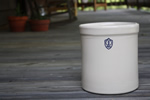
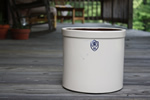
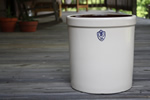
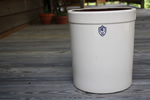
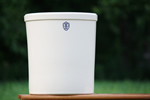
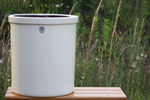
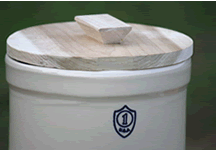
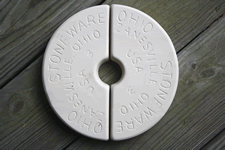
fermented foods included in our diets. We carry six sizes of Ohio ceramic
stoneware fermenting and pickle crocks, weights, wooden lids and preserving
covers made in the USA. Or select from four sizes of German-Made ceramic
crocks with water sealing lid and weights.
All in stock ceramic crocks, lids and weights are shipped from Virginia
by UPS to arrive within one to five business days of our receiving your
order. These stoneware ceramic crocks can be delivered to any door in
the Contiguous United
States. If you’re near the mountains of Virginia or North
Carolina you can pick up one at our stores. Do you know other fermentation
fanatics? Call to organize a reduced-cost wholesale bulk delivery or
in-store pick up of crocks.
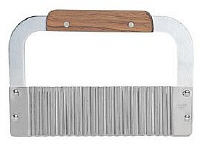
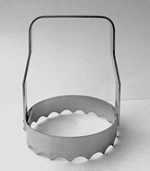
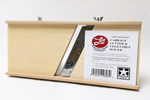
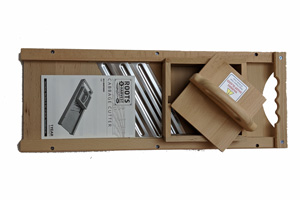
Don't miss our selection of handy sauerkraut making supplies. These
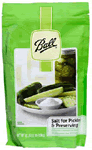
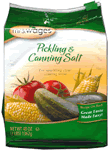
include cabbage cutters, wooden ponders, pickling salts, stainless steel
bowls and hand held cabbage choppers. See our sauerkraut recipe and
learn how to make DIY sauerkraut
in a ceramic crock with or without a lid at home.
|
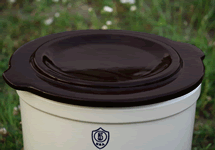
Ohio Stoneware Crock Lids, Weights and Preserving Covers
|
|
|
|
|
|
|
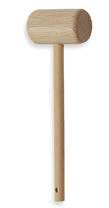
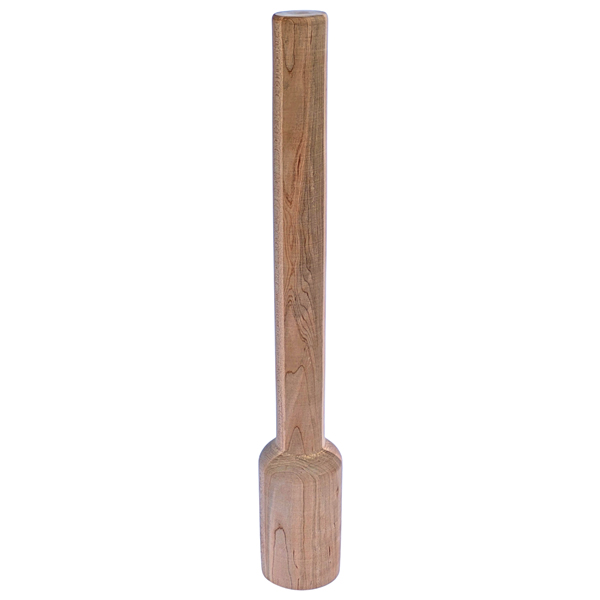
Wooden Cabbage Ponder
7 3/4" inches long
Price: $4.59
Add to Cart
|
|
|
|
|
|
|
|
|
|
|
Fermentation FAQs |
| Fermentation Defined |
Fermentation is one of the oldest and most important food
preservation technologies. Fermentation occurring naturally is generally
part of the process of decay. Controlling the fermentation process, however,
gives many tasty rewards.
Indigenous fermented foods like bread, wine and cheese have been made
and consumed for thousands of years and are strongly linked to culture
and tradition across the globe. Humans once knew the value of fermented
foods, however after the beginning of the industrial revolution with new
pasteurization and refrigeration tech the popularity of homemade fermented
foods diminished.
Fermentation is the" slow
decomposition process of organic substances induced by micro-organisms,
or by complex nitrogenous substances (enzymes) of plant or animal origin,"
according to Azam-Ali and Battcock’s 1998 article A Global Perspective:
Fermented Fruits and Vegetables, "Fermentation is a relatively
efficient, low energy preservation process, which increases the shelf
life and decreases the need for refrigeration or other form of food preservation
technology." |
| How to Ferment: Important
factors for quality fermentation. |
Traditions from the Blue Ridge Mountain heritage Foxfire
Book explain, "Be sure that th'signs are not in th'bowels," says Daisy
Justice. "When the moon is new is the best time to make kraut, pickle
beans, corn, or green tomatoes. If the signs are in the bowels they will
be slimy or soft and not fit to eat." (Wigginton, 1972 p.176)
Ingredients: Selecting good quality ingredients is important
when fermenting food. It doesn't generally matter if the ingredients aren't
picture perfect – cider vinegar won't look or taste any different
for using ugly apples – but avoid using old, rotting, or very dirty
food.
Salt: Salt is used in many fermentation recipes. It draws
liquid from foods thereby restricting undesirable bacteria and mold development.
Do not use iodized salt which is known to hinder the fermentation process
by restraining the growth of desirable bacteria and lactic acid formation.
Salt appropriate for fermenting is known as "pickling salt"
or "Kosher salt".
 
Water: Avoid using chlorinated water (any water where
chlorine has been added by residential municipalities to control bacteria
growth), if possible. Chlorinated tap water can restrict the fermentation
process similar to iodized salt. Jump below to
learn how to make tap water chlorine free.
Temperature: Foods undergoing fermentation are sensitive
to cooler and hotter temperature preferences. Generally a warmer temperature
is called for at the start of fermentation, and once fermenting has peaked
cooler temperatures should be reached. Heat affects the rate of fermentation
and thus, microbe growth. Allowing fermentation to take palace in appropriate
temperatures will successfully produce a desirable flavor. |
| What's so great
about fermentation? |
Fermentation increases vitamin levels, good bacteria and enzymes
that boost the immune system, promote intestinal wellness and have richer
flavor than normal foods.
Micro-organisms of fermentation contain certain enzymes, such as cellulases,
which are incapable of being synthesized by humans. Microbial cellulases
hydrolyze cellulose into sugars which are then readily digestible by humans.
Acetylcholine, a product of fermentation, helps to stimulate peristalsis
(the movement of food through the intestine), improves blood circulation,
prevents constipation, and helps crank up gastric juices when they are insufficient
and down-regulates them when there is too much. In short, products of
fermentation contain tons of probiotics.
Vitamin K2, known to fight cancer, is abundant in fermented foods.
In Cancer Preventive Impact of Naturally Occurring, Non-nutritive Constituents
in Food (Frohlich et al 1997) , report substances in fermented
foods have been found to have a protective effect against the development
of cancer.
A (Svanberg, 1992) Tanzania study showed that children fed with fermented
gruels had a 33% lower incidence of diarrhea than those fed unfermented
gruels, owing to the inhibition of pathogenic bacteria by lactic acid forming
bacteria. |
| What are the
tradeoffs between fermenting crock styles and shapes? |
The cylinder is the most popular crock in the United States.
The crock producing capital of the United States of America is known to
be Roseville, Ohio. Across the world, other cultures developed crock designs.
There is not a right or wrong way to harness the power of fermentation.
Every vessel for fermentation involves tradeoffs. So have no fear, try any
shape fermentation crock you want.
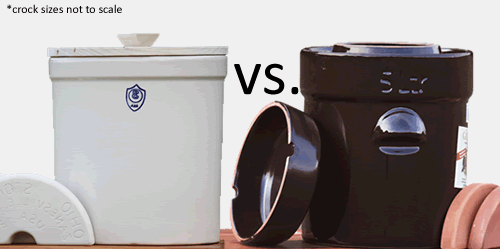
Fermenting in the USA has taken place in a ceramic crock with a simple cylinder
shape. The straight cylinder shape provides the largest easy-to-accesses
surface area. Cylinder crocks make compressing your ferment with weight
easier. Fermenting sauerkraut and other vegetables does not require oxygen.
The benefit of an open crock is so pressure won’t build up. The contents
are also easy to get to so you can smell, see, taste and learn as the ferment
matures. The con of an open crock is that access to oxygen enables aerobic
(formed-in-oxygen-environments) yeasts and molds to develop on the ferment’s
surface. Read more about surface molds and
what to do about them below.
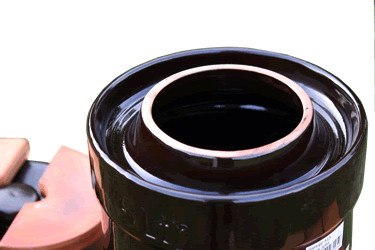
The German crock design has lip around the opening mouth designed to prevent
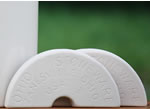
any outside air from getting in and semi circle weights for keeping the
vegetables submerged. This is a very efficient method for preventing the
surface growth of anaerobic yeasts and molds. The disadvantage to the German
design is that it’s only effective if you leave the crock sealed.
If you want to look at, feel or smell your food the fundamental purpose
of the design is defeated (Katz, 2012).
|
| Fermenting in Glass Jars |
A glass jar with any liquid submerging raw food will ferment.
Fermentation pros say the wider the lid the better. Use larger jars for
the fermentation process and smaller ones to store and share your creations.
(More about jar storing ferments) There are MANY
methods and materials for doing jar fermentation. Soon, you'll want to do
larger batches and graduate to stoneware ceramic crocks.
A loose-fitting Mason jar lid, a small hole drilled in the lid, or a plastic
air lock fitted with a rubber jar gasket to make a tight seal (these air-lock
Mason jar lids aren’t just DIY from your wine store anymore), are
all effective methods to allow excess pressure to escape. |
| Why can't you
ferment in an airtight container? |
| Because pressure builds up during the production of lactic
acid in the form of Carbon Dioxide gas (in heterolactic (alcoholic) fermentation
- shown in this
fermentation chemical reaction info graphic!). Fermenting cheeses create
little anxiety, however fermenting vegetables or liquids in a sealed jar
can cause pressure to build up and, if it isn’t released often, explode. |
| How long does it take to
make sauerkraut? |
| 3 to 4 weeks |
| How does one
make sauerkraut? |
Materials
- A REALLY big bowl (for tossing cabbage and salt)
- A Pounding Device (read more)
- Sharp Knife, handheld cabbage chopper or a cabbage head sauerkraut
cutter
- Salt (if you like salt!)
How much cabbage and salt to use depends on the size of your fermentation
vessel and the recipe you’re following. Some popular recipes say:
12 pounds of cabbage for 4 tablespoons of salt. Or A one gallon crock will
process about five pounds of cabbage (roughly two medium sized heads and
three tablespoons of salt.)
Procedure
- Wash and rinse ceramic crock
- Peel the cabbage. Remove damaged leaves and core.
- Slice cabbage as thinly as you can.
- Mix cabbage and salt well in bowl.
- Pound cabbage while rotating bowl for maximum coverage.
- Squash cabbage into the crock with fist or cabbage
stamper until liquid rises over the cabbage, this liquid is the
signal that weights can be placed inside the crock and on top of the
cabbage. There are many styles of lids and weights. Semi circle weights
are handy for keeping the vegetables submerged (read
more about ceramic weights and lids).
- Place lid on crock and, if you're trying the german style crock, add
water along the ring to seal in the fermentation process. Learn
more about pros and cons to various crock styles.
- For the german style, except for keeping an eye on the water level
around the rim, leave the crock and its interior totally alone. If the
water gets too low the outside air seal will be broken.
- If your kraut isn't sealed from outside air exposure, you'll want
to check your ferment every day or so and skim off surface mold that
develops (Read about surface molds).
- You’ll need a cool place to store your crock for three to four
weeks while the fermentation process of cabbage and salt to sauerkraut
ensues. Specifically, that’s temperatures of 60 to 70 degrees
Fahrenheit.
|
| How to Make
Appalachia Apple Beer |
| Peel your apples and dry the peelings in the sun or by the
stove. Put them in a crock and add enough boiling water to cover them. Cover
the crock and let it sit for one or two days, until all the flavor comes
out of the peelings. You may add some sugar of you want. (Wigginton, 1972
p.173) |
| Cracks in my crock:
is it still usable? |
| It’s a problem – crocks are fragile and heavy.
They can crack pretty easily. If you have a crock with a hairline crack,
check to see if it still holds water. Fill the crock with water and monitor
the level to see if it leaks over the course of a day and night. Molds can
grow in these cracks (many times being the reason the crack is discovered).
|
| Cleaning Mold
in Cracks |
| Use vinegar or hydrogen peroxide to scrub the area before
washing with hot soapy water and rinsing. |
| What to do about surface
mold and yeast growth |
Submerging vegetables in water is a technique for fostering
fermentation (with no oxygen). If you're using an open air container,
“The edge” or the area where the vegetable / liquid brine
meets the oxygen-rich air, encourages the frequent development of yeasts
and molds. Surface mold and yeast growth is common and normal. Indeed,
it should be removed but is not cause for alarm and doesn’t mean
your fermentation is ruined.
Remove molds by first removing weights and interior lids. Then, skim the
mold from "the edge" with a stainless steal spoon. As long as
the mold is white it isn’t harmful. If other color molds start to
grow, do not eat them. The longer you allow a mold to grow, the deeper
it penetrates your ferment, and there’s not much more unpleasant
than moldy-tasting kraut (2012).
In his book The Art of Fermentation Katz explains, “The microbial
reality, in spontaneous fermentation (such as sauerkraut) or a culturing
condition, is that the critical mass of fermentation organisms will easily
dominate incidental environmental molds. Don’t worry too much about
them.” |
| Strategies
to reduce surface mold |
Try the German ceramic crock design. Like with any crock style
there are pros and cons.
Cover the ferment with a layer of olive oil
Cover the ferment with a heavy plastic bag filled with water (doubling as
a weight!)
|
| The different styles
of fermentation crock lids |
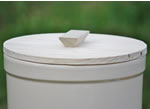
A crock may or may not have a lid or it may have two lids.
Interior lids sit atop the food being fermented to keep it underwater.
Exterior lids cover and enclose the crock. Some crocks come with lids,
some people purchase or fashion flat wooden disks or improvise with plates.
Unless you have a very flat dense weight, like the preserving weights
from Ohio, you’ll need a flat object with heavy objects on top of
it (I’ve seen gallons of water, rocks (but not limestone which can
dissolve in the acid), to hold down your ferment.
The interior crock lid must have enough space so it won’t get wedged
inside the crock or, even, cause the crock to burst open. Crocks naturally
taper inward and materials like wood expand in the fermentation brine.
Don’t be tempted with a tight fitting lid.
|
| Pounding Tools |
| When fermenting vegetables it is advantageous to breakdown
their cell walls and release the juices by pounding them. On a small scale
vegetables can be squeezed. Large or frequent batches require a tool. Any
sturdy wooden tool can get the job done or try “The
Kraut Pounder”. Salt also aids in releasing the water from vegetables.
|
| Storage |
Fermentation products should still be protected from air
after the process is complete. Transfer your fermented foods to glass
jars with storage lids that can be shared and eaten from. When a jar becomes
half empty, it is also half-way full of air. In warm temperature particularly,
but also in a refrigerator, vulnerability to molds increase when there
is more air in the jar. Transfer the remaining kraut from half-empty jars
to fill up smaller jars with no significant air for mold growth to develop.
|
| How can I make
tap water chlorine-free? |
| Tap water can be made chlorine-free in most areas simply by
boiling it and letting it cool again, or even just by leaving it in an uncovered
pot overnight. This doesn't work in areas where the water is chlorinated
by adding chloramine to the water, a practice done specifically to keep
the chlorine in the water. Many modern water filters will remove both chlorine
and chloramine, however. |
| Bibliography |
The information provided on this page is for educational
purposes and does not intend to promote specific fermentation vessels
or methods over others.
--------------------
Battcock, M., & Ali, S. (1998). Fermented fruits and vegetables:
a global perspective. Rome: Food and Agriculture Organization of the United
Nations.
Frohlich, R.H., Kunze, M. and Kiefer, I., (1997), Cancer Preventive Impact
of Naturally Occurring, Non-nutritive Constituents in Food, Acta Medica
Austriaca, Austria
Katz, S. E. (2012). Basic Concepts and Equipment . The art of fermentation:
an in-depth exploration of essential concepts and processes from around
the world. White River Junction, VT: Chelsea Green Publishing.
Svanberg, B., (1992), Fermentation of Cereals: Traditional Household
Technology with Nutritional Benefits for Young Children, IDRC Currents
2, Canada
Wigginton, E. (1972). Preserving Vegetables . The Foxfire book: hog dressing;
log cabin building; mountain crafts and foods; planting by the signs;
snake lore, hunting tales, faith healing; moonshining; and other affairs
of plain living (). Garden City, NY: Anchor Press Doubleday. |